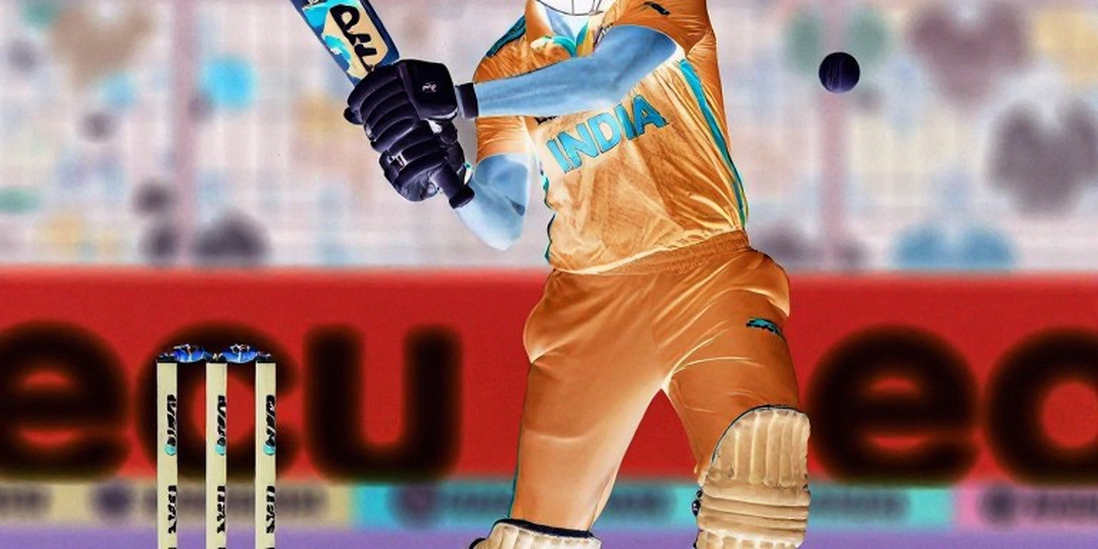
Last-Ball Thriller: Coyte's Boundary Seals Sydney Sixers Win as Brisbane Heat's Death-Overs Slump Proves Costly
ब्रिस्बेन के एलन बॉर्डर फील्ड पर शुक्रवार रात खेले गए WBBL मुकाबले में सिडनी सिक्सर्स ने ब्रिस्बेन हीट को आखिरी गेंद पर हराया। हीट ने पांच विकेट पर 154 रन बनाए — 15वें ओवर में एक विकेट पर 117 रन से अंत तक केवल लगभग 37 रन और चार विकेट गंवाए। जवाब में सिक्सर्स ने एक विकेट पर 103 रन बनाने के बाद 27 रन में चार विकेट गंवाए, लेकिन सारा कोयटे ने अंतिम गेंद पर चौका जड़कर मैच जिता दिया। आखिरी ओवर में छह गेंदों पर पांच रन चाहिए थे; बर्न्स रन आउट हुईं और समीकरण दो गेंदों पर तीन रन से एक गेंद पर दो रन हो गया। एलिस पेरी ने 38 गेंदों पर 58 रन (स्ट्राइक रेट 152.6) बनाए। जॉर्जिया रेडमेड 44 गेंदों पर 58 और चार्ली नॉट 47 गेंदों पर 57 रन ही बना सकीं। लूसी हैमिल्टन ने आखिरी ओवर में शानदार डेथ गेंदबाजी की, लेकिन एक चौका निर्णायक साबित हुआ। दो दिन बाद सिक्सर्स का सामना हॉबार्ट हरिकेन्स से और हीट का सामना सिडनी थंडर से सिडनी में ही होगा।
A finish that went down to the last ball
Sydney Sixers beat Brisbane Heat off the final ball of a Women's Big Bash League (WBBL) fixture at Allan Border Field in Brisbane on Friday night. At one stage a Super Over loomed, but Sarah Coyte found the boundary off the last delivery to take her side over the line. The result is not merely a two-point swing; it is a demonstration of what execution under pressure looks like, and of how death-overs batting and death-overs bowling decide games.
Brisbane Heat posted 154 for 5 after electing to bat. They were 117 for 1 in the 15th over and managed only about 37 runs across the last five-and-a-bit overs while losing four wickets. In T20 cricket, that is a substantial under-acceleration. A side that has lost one wicket by the 15th over on 117 should be projecting towards 170-plus. Heat never got there — and that 15-to-20-run shortfall proved decisive.
The final over, ball by ball
Chasing, the Sixers had reached 103 for 1 before the game turned. They lost four wickets for 27 runs, sliding from 103 for 1 to roughly 130 for 5. A chase that had appeared straightforward suddenly reopened.
At the start of the last over, the Sixers needed five off six. Lucy Hamilton took the ball and, by the account of the original report, bowled beautifully at the death. The equation narrowed to three off two; then Burns was run out, bringing it to two off one. A single boundary would settle it, a dot would force a Super Over. Coyte hit the boundary.
Read that sequence back — five off six, three off two, a run out, two off one, a boundary — and it is clear how many single moments could have swung the game. That is why the 'thriller' and 'nerves of steel' framing is supported by the ball-by-ball record rather than being mere embellishment.
Perry's platform
Ellyse Perry made 58 off 38 balls, a strike rate of 152.6. The T20 benchmark for top-order batting sits around 120–135, with elite anchor-finishers at 140-plus. Perry was comfortably above that band.
More important is when those runs came. She was the load-bearing element of the 103-for-1 platform. When the side collapsed for 27 runs across four wickets, the value of her innings became obvious in retrospect: without that foundation, the collapse would likely have been terminal. In other words, Perry's was the innings the chase was built on.
There is also a structural note here. Perry is the Sixers' most experienced and reliable batter, and their chase architecture leans heavily on her. That is a strength while she is at the crease and a latent single-point-of-failure risk when she is not. Secondary anchor development is worth monitoring across the rest of the season.
Capsey and Coyte repair the innings
When the middle order fell away, Alice Capsey and Coyte rebuilt the finish. Capsey made 21 not out off 14, a strike rate of 150. The volume looks small, but the situation inflates its value: with four wickets down and the required rate climbing, scoring at 150 was the only way to stay in the game.
Capsey, an England international, is used by the Sixers in a high-leverage middle-order finishing role — few balls, immediate impact. Her 21 not out probably mattered more than the raw number suggests. That said, 14 balls in one match cannot establish a finishing profile; it is a good signal, not proof.
Coyte's contribution is statistically trivial and situationally decisive. A tail-ender's boundary off the final ball is a clean example of a leverage performance — an impact far out of proportion to its raw size. That is the factual basis for the 'nerves of steel' tag. But one boundary does not establish a durable big-game temperament. It is a moment, not a trait, and should be treated as provisional until repeated.
Hamilton's death over
Hamilton reduced five off six to a near-unwinnable equation at one point, and the report describes her spell as beautiful death bowling. That is not a small compliment: death bowling is the hardest job in T20 cricket, and a single error in line or length can decide the match.
She almost pulled it off. The equation reached two off one, meaning she forced the batters to attempt the big shot and also took a wicket along the way. One boundary undid it. That is the cruelty of the role — five good balls erased by the sixth.
Even so, her spell is a data point worth tracking. If she sustains a sub-eight economy in death overs over the next few fixtures, it will be reasonable to treat her death bowling as a genuine skill rather than one good night. For a Heat side whose problem is batting tempo rather than bowling, that is a useful asset.
Heat's innings: 117 for 1 to 154 for 5
Heat's innings splits into three phases: a substantial opening partnership between Georgia Redmayne and Charli Knott; a strong middle position of 117 for 1; and a final five-and-a-bit overs producing only about 37 runs and four wickets.

Redmayne made 58 off 44 (strike rate 131.8) with eight fours — a solid top-order innings, slightly below elite strike rate. Knott made 57 off 47 (strike rate 121.3) with five fours and three sixes — boundary-heavy but slow-ish in aggregate.
Two anchor innings at 121 and 131 is the classic anchor-heavy T20 batting profile. The total looks respectable, but if the anchors occupy the crease into the 14th or 15th over, the finishers downstream get too few balls. That is exactly what happened to Heat.
An important question follows: accident or structure? One match cannot say. But two anchor innings both below roughly 125 strike rate in the same innings is at least a signal. Monitor Heat's overs 15–20 run rate in their next fixture; if it is again below eight an over, the structural reading gains support.
Gardner's spin breaks the stand
Gardner's spin broke the key partnership. That is the standard T20 function of spin in the middle overs: when the top order is set and the seamers are going for runs, the spinner applies the brake. The value does not always show in the wicket column alone; it shows in the run rate either side of the breakthrough.
Heat's paradox is that their batters produced good numbers in a losing cause. Redmayne 58, Knott 57, Annie O'Neil 18 off 12 at a strike rate of 150. A finisher did her job. Yet the side did not reach 170-odd, because the finisher did not get enough balls — O'Neil's opportunity arrived only in the closing overs, by which point the overs were running out.
Responsibility therefore sits with the batting structure, not the bowling. Heat were slow in strike rotation as well as in boundary-hitting during the death phase. Every innings has a bad over; Heat's final five-and-a-bit overs yielded about 37 runs at roughly seven an over, which at the death is clearly short.
The Sixers' chase was two acts, not one
The Sixers' pursuit was not a smooth one. Act one: 103 for 1 under Perry's control, with tempo and authority. Act two: four wickets for 27 runs, which reopened the match and forced Capsey and Coyte to reconstruct the finish ball by ball.
That collapse matters analytically. Losing four for 27 from 103 for 1 points to a middle-order continuity problem: once wickets began to fall, nobody other than Perry could hold the innings together. Stronger bowling attacks will punish that. If the Sixers are to contend in the playoffs, middle-order stability between overs 12 and 17 is the metric to watch.
What saved them was depth. This is a side with batters down to seven and eight who can score under pressure. Coyte's final-ball boundary is the product of that depth. Teams without it lose these games. That is a structural advantage, not a one-off.
Venue and conditions
Allan Border Field in Brisbane is very likely Heat's home base, which would make this a home defeat — the costliest kind in a league table, and more so if it interrupted a winning run, as the report's reference to a season-long streak implies.
Honesty requires a caveat. The source does not describe the pitch, the outfield, dew, weather or any DLS calculations. A Friday night fixture raises the plausible influence of dew and temperature — dew makes the ball slippery and reduces a spinner's grip in the second innings — but there is no evidence in the information available. Treat conditions as an open question rather than a conclusion.
What the numbers say
Perry 58 off 38 (SR 152.6) — the highest strike rate in the match and the largest single contribution to the chase. Redmayne 58 off 44 (SR 131.8, eight fours). Knott 57 off 47 (SR 121.3, five fours, three sixes). Capsey 21 not out off 14 (SR 150). O'Neil 18 off 12 (SR 150).
Three readings follow. First, Perry was the engine of the innings. Second, Heat's top order delivered volume without tempo — both anchors scored more slowly than Perry off more balls, and that gap became the match's gap. Third, Capsey and O'Neil both operated around a 150 strike rate in short bursts, consistent with their roles. Small samples, so no season-long inference.
Coyte's boundary appears in the scorecard as four runs. Its weight lies entirely in context and timing. Likewise Hamilton's final over reads as a handful of runs but represents taking a five-off-six equation to two off one. Some parts of cricket do not compress neatly into statistics, and death-overs play is one of them.
Table context and what comes next
WBBL has no ICC ranking, and the source gives no exact ladder position for either side, so the table consequence cannot be stated with confidence. Both are historically strong franchises with plausible playoff claims, which makes close results weigh more than ordinary fixtures.
The most concrete operational fact available is the schedule. In two days the Sixers host the Hobart Hurricanes. Earlier the same day, the Heat face the Sydney Thunder at the same Sydney venue. Both sides therefore have a two-day turnaround, and the Heat additionally have travel from Brisbane to Sydney.
That is a real operational risk. Travel, reduced recovery and double-header congestion compound fatigue, particularly for fast bowlers and power-hitting finishers. Rotation may become necessary, and for the Heat it is sharper because they have almost no time to work on the batting issue.
Narrative check: 'gallant Heat' and 'nerves of steel'
Two narratives stand out in the post-match coverage. First, Coyte's 'nerves of steel' personality, built on the final-ball boundary. Second, 'gallant Heat', which frames a likely home defeat as admirable.
The first is factually grounded but sample-fragile. One boundary does not prove big-match temperament. It was an important moment, well used, but treating it as a permanent trait sets up an unfair expectation.
The second deserves a closer look. If this was a home defeat and if it interrupted a winning run, calling it gallantry softens a real competitive cost. That is common in cricket journalism — consoling language for the losing side — but readers should distinguish the temperature of the language from the temperature of the facts.
Between the two, the strongest storyline is Perry's, because it is supported by data: highest strike rate, largest share of the runs, and the platform on which the win was built. When an innings leads on both numbers and impact, its narrative is the least contestable.
It is also worth remembering that Cricket Australia's media platforms have an editorial interest in amplifying WBBL drama to grow audiences. That is legitimate, but headline intensity should be discounted relative to underlying data.
Comparing the two sides
On batting depth, the Sixers held the edge. Perry laid the platform and Capsey and Coyte rescued it from the lower order. Heat's top order was also strong — Redmayne and Knott put on a substantial stand — but they could not generate death-overs tempo. Talent looks close to level; execution separated them.
On bowling, Gardner's spin broke the key stand for the Sixers, while Hamilton kept the match alive to the last ball for the Heat before one boundary undid her work. Bench depth is not disclosed for either side and should not be speculated on.
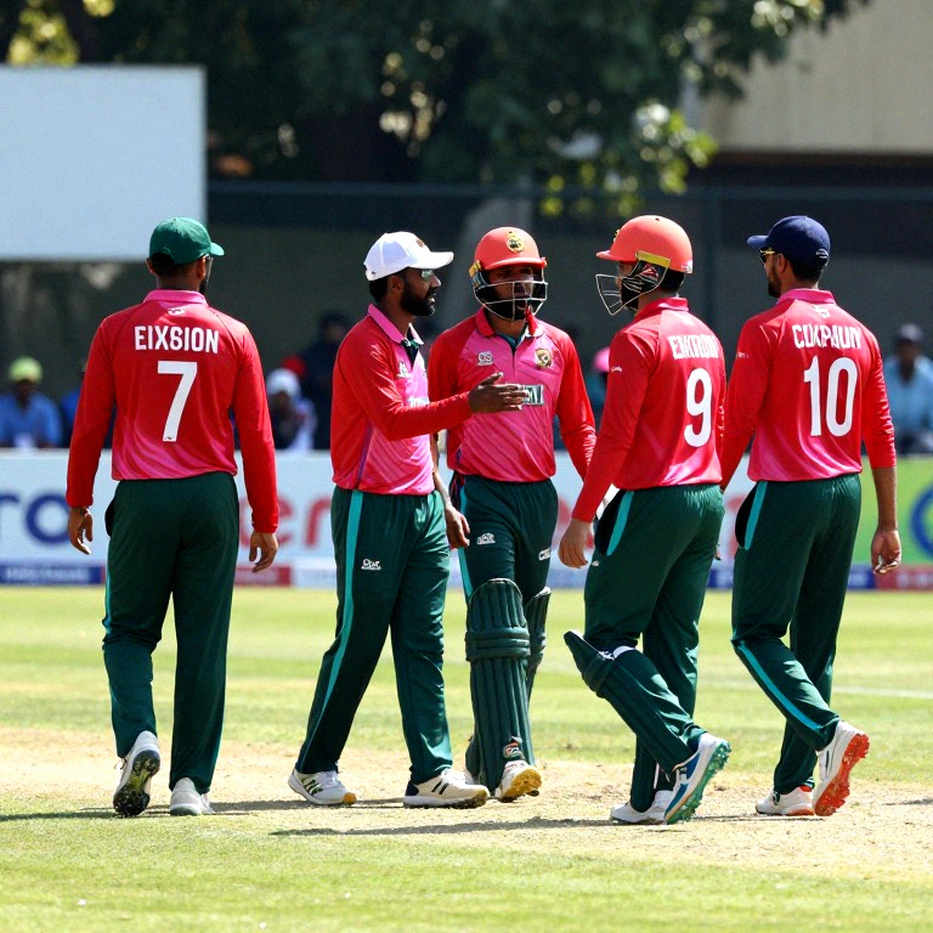
On this evidence the teams are closely matched, separated by death-overs execution and one clutch ball. That is not a consoling conclusion; it points to more tight contests ahead.
Risk register
First and most important: Heat's death-overs scoring rate. Going from 117 for 1 to 154 for 5 means they could not clear eight an over at the close. If repeated, it becomes a structural problem, and their overs 15–20 run rate against the Thunder will be the key number to watch.
Second: the Sixers' middle-order fragility. Four for 27 after 103 for 1 is a warning. The lower order bailed them out this time; it will not always. Stronger attacks will expose it.
Third: fixture congestion. Both sides play again in two days, and the Heat must travel Brisbane to Sydney. That raises fatigue and rotation risk.
Fourth and least severe: narrative overreach. 'Nerves of steel' and 'gallant Heat' inflate a single-match sample. Treat them as provisional.
Overall, the risk profile is routine competitive risk. There is no injury controversy, integrity issue or financial exposure in this source.
Rules and governance
No rule controversy is indicated. Standard T20 provisions applied, including the Super Over, which was correctly available on the final ball had the scores finished level.
The only officiating-adjacent moment was Burns' run out on the penultimate ball. That is a decisive moment that would normally attract review scrutiny, but no dispute is reported, so the call can reasonably be treated as uncontroversial. No DLS, DRS or eligibility issues appear anywhere in the source.
WBBL and the wider women's game
This is not a commercial data point: the source contains no financial, attendance or broadcast figures. It is, however, exactly the on-field product that underpins the league's commercial case — two strong sides separated by the final ball.
The presence of England's Capsey alongside Australian internationals Perry, Gardner, Redmayne and Knott illustrates WBBL's function as a cross-border talent platform, which is central to both its commercial and developmental value proposition.
One clarification is necessary. The commercial expansion of women's leagues is widely discussed, but nothing in this source evidences it. Any such claim is industry background, not a finding of this article. What can be said is that last-ball finishes are disproportionately valuable broadcast products for women's cricket — highlights, social clips and engagement — but one match does not move audience or revenue metrics. It is a contributing data point, not a driver.
Conclusion
This was a genuine, well-evidenced WBBL thriller. Sydney Sixers beat a likely in-form Brisbane Heat at a probable Heat home venue, built on an Ellyse Perry platform of 58 off 38 and finished by a Sarah Coyte boundary off the last ball.
But it remains a single regular-season match. Its sporting meaning is real yet modest, and the 'nerves of steel' and 'gallant Heat' narratives should be discounted for editorial amplification and small-sample fragility. Three threads are worth following: Heat's death-overs scoring rate, the Sixers' middle-order wobble, and the two-day turnaround for both sides.
If Heat's overs 15–20 run rate stays below eight in their next fixture, the structural reading gains support. If the Sixers lose another cluster of wickets between overs 12 and 17, their chase fragility is confirmed. If Hamilton sustains a sub-eight death economy, she should be tracked as a rising death-bowling asset. Those three signals are how a single match becomes a season-level read.
A final caveat: this analysis rests on public information and a single match report. It is provided for sports-information reference only and does not constitute betting advice or any win/loss recommendation. Sporting outcomes are highly uncertain and single-match samples are noisy; re-validate against multi-match data before drawing durable conclusions.