
Asian CricketAshraful Handed Bangladesh Youth Camp Batting Coach Role as ACC Rising Stars Begins in Qatar on 19 November
Ashraful Handed Bangladesh Youth Camp Batting Coach Role as ACC Rising Stars Begins in Qatar on 19 November
मोहम्मद अशरफुल को बांग्लादेश की युवा टीम का बल्लेबाजी कोच नियुक्त किया गया है। यह नियुक्ति एसीसी एशिया कप राइजिंग स्टार्स से पहले की गई है, जो 19 से 29 नवंबर तक कतर में खेला जाएगा। यह आठ टीमों वाला 50 ओवर का टूर्नामेंट है, जिसमें ग्रुप ए में बांग्लादेश ए, श्रीलंका ए, अफगानिस्तान ए और हांगकांग तथा ग्रुप बी में भारत ए, पाकिस्तान ए, नेपाल और यूएई हैं। बांग्लादेश ए अपना पहला मैच 19 नवंबर को हांगकांग के खिलाफ खेलेगा; ग्रुप चरण 19-24 नवंबर, सेमीफाइनल 26-27 नवंबर और फाइनल 29 नवंबर को है। टीम का मुख्य कोच सोहेल इस्लाम हैं और चयन राष्ट्रीय टीम से बाहर के क्रिकेटरों से किया जा रहा है। अशरफुल ने कहा है कि वे अपना सर्वश्रेष्ठ देना चाहते हैं। टूर्नामेंट का सबसे बड़ा आकर्षण 22 नवंबर का भारत ए बनाम पाकिस्तान ए मुकाबला है। ध्यान दें कि यह खबर एकल स्रोत पर आधारित है और टीम की घोषणा अभी नहीं हुई है।
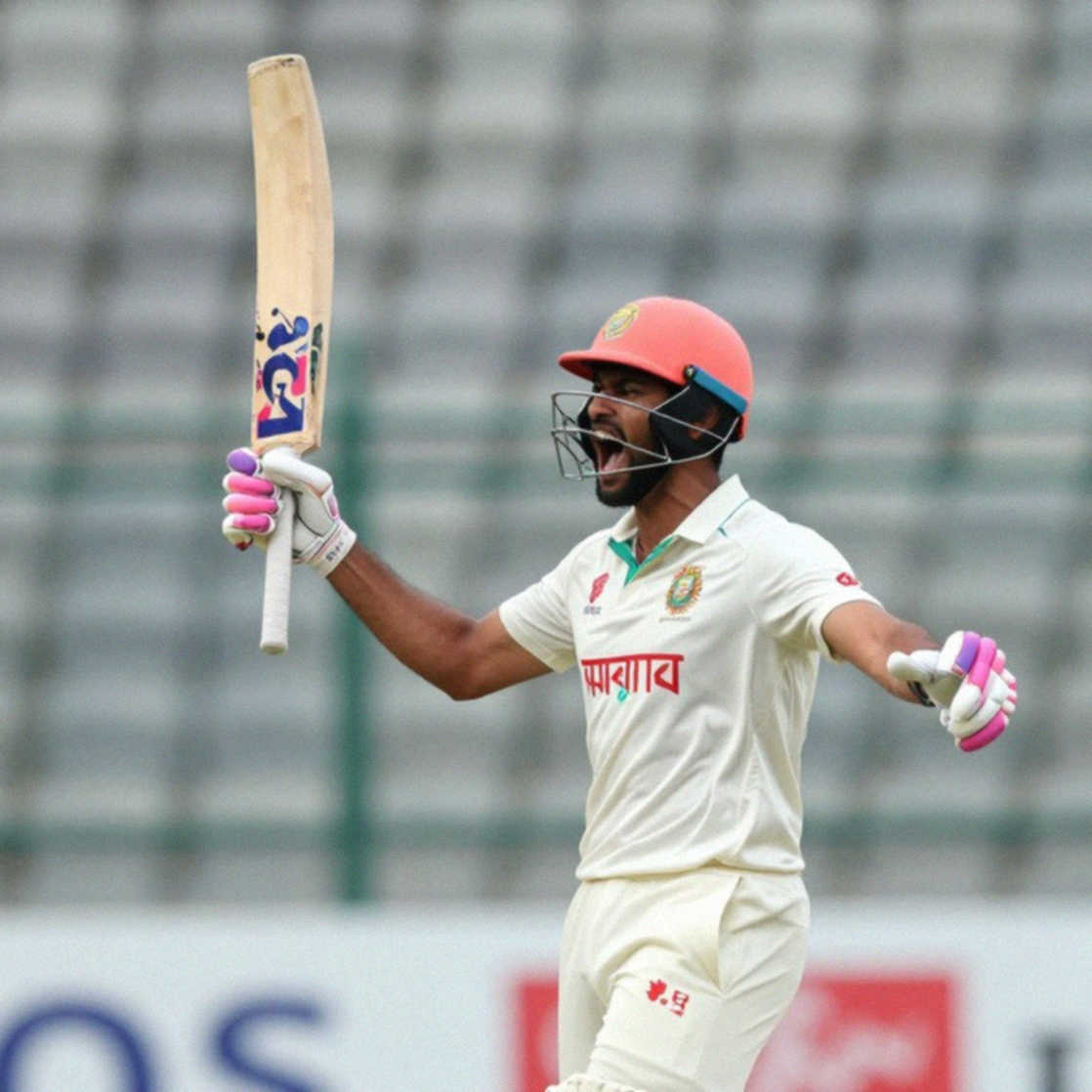
Former Bangladesh captain Mohammad Ashraful has been handed the role of batting coach for the national youth side. The appointment comes as Bangladesh's emerging team prepares for the ACC Asia Cup Rising Stars, which begins in Qatar on 19 November. According to a Dhaka Post report, Ashraful has been given the role and has said he wants to give his best in the new responsibility. It is worth noting that the report rests on a single source and gives no details of the appointment's duration, technical terms, or financial package. It is also unclear whether this is a full-time appointment or a temporary arrangement for this tournament alone.
The ACC Asia Cup Rising Stars is an eight-team, 50-over competition run by the Asian Cricket Council and staged in Qatar. It runs from 19 to 29 November. The eight sides are split into two groups of four. Group A contains Bangladesh A, Sri Lanka A, Afghanistan A and Hong Kong, while Group B contains India A, Pakistan A, Nepal and the United Arab Emirates. The group stage is scheduled from 19 to 24 November, the semifinals will be played on 26 and 27 November, and the final on 29 November. Bangladesh A open their campaign against Hong Kong on 19 November itself.
Speaking about the new responsibility, Ashraful said, 'I want to give my best. The BCB has given me a responsibility and I will try to fulfil it.' This is a standard commitment statement rather than a technical or tactical claim, so it should be read as a motivational signal, not as evidence of coaching competence. The head coach is Sohel Islam, whose profile is considerably less prominent than Ashraful's. That creates a genuine ambiguity: who sets the batting curriculum, and how authority is divided between the two coaches, is not described anywhere in the report.
The selection policy is stated explicitly. The squad is being drawn from 'cricketers outside the national team', meaning this is not the national side but a development pool of fringe and young players. The Bangladesh Cricket Board has indicated it is 'thinking of forming a strong team', which suggests the board is treating the event competitively rather than purely as development. That tension between development and results could feed selection debates later. For now, however, the squad list has not been made public, so no firm assessment of batting depth, bowling composition or bench strength is possible.
Ashraful's background gives the appointment an entirely different dimension. He was once regarded as Bangladesh's most gifted batter, burst onto the scene with a Test century as a teenager, and was later handed the captaincy. But after the 2026 Bangladesh Premier League spot-fixing allegations he was banned and his career fell into deep crisis. After a relaxation of the ban he returned to domestic cricket. That history underlines that a coaching role directly involving young players is for him as much a step towards rehabilitation and image rebuilding as a technical one.
The language of the report itself deserves attention. It uses a phrasing such as 'after being removed from the national team', which is vague and reductive. It most likely conflates his older exit from the national side with this new coaching appointment. Readers should not take it as a recent, performance-based sacking. Since the story comes from a single source, the terms of the appointment are better confirmed with a second, ideally official BCB source.
On the technical side, this is a 50-over tournament, so performances here do not transfer directly to T20 cricket. The 50-over structure splits an innings into two phases: building for the first 35 overs and accelerating in the last 15. Two new balls are used from either end, so swing and seam matter in the powerplay while spin control matters through the middle overs. If a 'Rising Star' shines here, their performance must be re-scored in a T20 context before any conclusions are drawn about the national T20 side.
The hosting dimension matters too. Qatar is a neutral Gulf venue where pitches are generally regarded as flat and dry with some assistance for spin. In day-night matches the dew factor becomes important, weakening spin grip and favouring the chasing side. It should be made clear that these pitch traits are inferences drawn from the venue type, not facts stated in the report. Similarly, the spin advantage Bangladesh enjoy at home will not apply at a neutral venue; adaptation is the real test.
In format terms, an eight-team structure of two groups of four gives each side a minimum of three group matches before the knockout. That is adequate but not a large sample for talent evaluation. In Group A, Bangladesh A face Sri Lanka A (spin and finesse), Afghanistan A (strong young spin) and Hong Kong (associate level) — one peer, one dangerous peer and one underdog. Bangladesh's path is navigable, but Afghanistan A and Sri Lanka A are the two genuine hurdles.
The event's biggest draw is not a Bangladesh fixture but the India A versus Pakistan A match in Group B on 22 November. That game is the centre of the tournament's audience pull. India and Pakistan sharing a draw, combined with a neutral host venue, reflects the ACC's strategy of containing the event's geopolitical sensitivity.
Commercially, this is not a franchise league but an ACC regional tournament. There are no broadcast-rights valuations, sponsorship figures, player salaries or any other valuation available, so drawing conclusions on these would be pure speculation. What is clear is that appointing a high-profile former player as a youth coach is a low-cost, high-visibility move for both the board and the tournament. A second-tier event that would normally attract minimal media coverage can be given attention through a recognisable name.
The real industry-level significance lies in the talent supply chain. This ACC 'A'-level tournament is a discovery pipeline feeding national selection, especially valuable for fringe players. It is also a small but meaningful step in the coaching-education direction, since placing a former international in a youth-coach role is itself a coaching-development pathway.
From a risk perspective, the most important and least obvious point is not about match outcomes but about integrity and optics. Placing a person previously banned for spot-fixing directly alongside young players creates anti-corruption sensitivity, because young and impressionable players are being mentored by him. Boards generally prefer to keep such figures at arm's length from the newest cohort. This is not the kind of risk that affects results, but it is certainly an administrative and brand-level risk. At the same time, if the rehabilitation succeeds publicly it could open the path to higher-profile national coaching roles for Ashraful; if controversy erupts, his timeline could slip back again.
At the level of public narrative, this story is personality-led rather than event-led. Ashraful's 'second chance' arc carries the entire report, with the tournament merely as context. Since his statement is low-information and no coaching performance data exists, media expectations are running ahead of the evidence. Fans may read the board's 'strong team' signal as a promise of a deep run, even though the squad has not yet been named.
The things to watch are clear: the Bangladesh A squad announcement will settle whether this is genuinely a 'strong team' or pure development; the group results from 19 to 24 November, especially against Afghanistan A and Sri Lanka A, will shape the national-selection prospects of fringe players; Ashraful's coaching will be judged through media and post-match analysis; and any official statement could amplify or calm integrity-related discussion. Overall, this is a low-drama, single-source administrative news item whose real substance lies in two things: a firmly dated 50-over youth tournament, and the re-entry of a gifted but controversy-scarred former star as a youth coach. The conclusions should be read with restraint rather than enthusiasm.
संबंधित खिलाड़ी
लोकप्रिय/पसंदीदा पुस्तकें
Shaw's 'Matter of One Innings' Career: What the Six-Innings Data Actually Says2026-11-06
Bangladesh’s Real Test in Dhaka: Batting Instability and Taskin Ahmed’s Leadership2026-11-06
Jayant Goyat's Maiden Five-for: The Story of a 21-Year-Old Batter-Turned-Seamer on a Dry Pitch2026-11-05
834 Runs, Six Innings and One 400*: What Chinmay Sutar's Record Answers — and What It Doesn't2026-11-05
Six Balls, Zero Runs and a Three-Year Record: Rohit Sharma's Duck at Eden Park Is Media's Turning Point, Not the Match's2026-11-05
Rohan Rajbhar's 140: the century Dharamshala built, and the one the auction will not2026-11-05
11 Years After Pant's Selection, Mohit Ahlawat's Comeback: The Untold Technical Story of a Maiden First-Class Century2026-11-05
अनुशंसित
Nahid Rana's Injury: Four Months, Three Injuries, and a Missing Workload Plan2026-10-25
CSK-SRH Four-Player Trade: The Overseas-Slot Dilemma Behind Kris Srikkanth’s Criticism2026-11-06
Ranji Trophy: Punjab's Resurgence and Tamil Nadu's Struggle, Full Day-1 Report2026-11-03
Lahore's Last Wicket: How Shadab Khan and Haris Rauf's 89-Run Stand Papered Over Pakistan's Top-Order Crack2026-10-27
Abhishek Sharma's 113 and the 'eleven hundreds' miscount: one innings, one category error, three matches left2026-10-28
Five Runs Behind: The Declaration Line Nobody Read in India's First Women's Test2026-11-01
From 154/9 to 243: Shadab Khan's Innings Is an Audit of England's Death Bowling, Not a Win Story2026-10-26
अनुशंसित
Pakistan All Out for 110: The 24.3 Overs the Scoreboard Never Counted2026-10-28
Dhaka's Sun and Sylhet's Grass: Bangladesh's Selection Crisis Is Bigger Than Taijul Islam's Future2026-11-05
208-Ball Hundred and a 19-Run Last Stand: The Real Frame of Chattogram's Win2026-11-04
Mirpur, Day Four: Behind West Indies' 64/0, Bangladesh's Real Enemy Is the Weather Clock, Not the Spinners2026-11-01
Uganda Ahead of India, Bangladesh Nowhere: The T20 Win-Rate Table Is Really a Calendar2026-10-30
153 at the Fifth Wicket, 121 in the Margin: What India's Win Over Zimbabwe Filed, and What It Left Blank2026-10-26
When the Domain Label Played the Wrong Innings: A Trade-Policy Document's Cricket Analysis2026-10-24
अनुशंसित
Excavating the Ranji Scorecards: Why Is India's First-Class Pipeline Failing to Produce a Second Test Batting Line?2026-11-04
Fifty in 14 Balls, Forty to Spare: How India's Powerplay Inverted the Maths of 1992026-10-28
Calling Jasprit Bumrah a 'picking-and-choosing' bowler is harsh: Shane Bond — but the real debate is about the calendar, not character2026-11-04
Three Quicks Rested, One Youngster Doubly Rewarded: Australia's Squad News Is a Workload Story, Not a Talent Story2026-11-02
The Empty Column: Asian Women's Cricket's Real Crisis Is the Record Nobody Wrote Down2026-11-01
'Apne single bhi le liye': Abhishek Sharma's 113 off 38 as India go 3-0 up and Yuvraj takes a cheeky dig2026-10-28
Sylhet Test, Day One: Taskin's 14-Over Load and the Unresolved Question of the Third Seamer2026-11-06
अनुशंसित
D-Three Trophy: A New Chapter in Bangladesh Domestic Cricket, Player Auction Underway in Dhaka2026-10-27
Ninety-Six Balls in Sylhet: Jangoo's Century and the Bangladesh Error the Scorecard Hides2026-11-06
Bangladesh Women's Team Heads to UAE: Nahida Akter's Captaincy, the Sharmin Akter Contradiction, and a Big Question Hidden in Ajman's Corridors2026-11-04
From Fish Market to Cricket: Anatomy of a Mis-Tagged Dataset2026-11-03
Kohli's 51 Balls in the Auckland Rain: When a Name's Echo Broke Tendulkar's Record2026-11-05
Charu Sharma, One Phone Call and D3: IPL's Auction Know-How Has Been Imported, But the Real Questions Are Structural2026-10-27
46 Off the Last 18: Tilak Varma's 51(26), Nitish's 26*(13) and India's 2-0 Lead at Christchurch2026-10-25