
Neutral Venue and an Uncapped Debut: Why Zimbabwe's Antum Naqvi's Test Career Is Already a Gamble Before It Begins
**Core Answer:** Antum Naqvi, a 28-year-old Belgium-born, Australia-raised all-rounder, is set to make his Test debut for Zimbabwe against Afghanistan in a two-match series in the UAE starting November 5, 2026, after receiving ICC eligibility clearance, though his bowling credentials remain unverified. **Key Facts:** - Antum Naqvi scored 300 off 295 balls for Mid West Rhinos in January 2024, the first triple century in Zimbabwean domestic first-class history. - Naqvi holds a first-class batting average above 60, but the sample size and competition strength remain unverified. - The two-Test series runs November 5 to November 13, 2026, at a neutral UAE venue serving as Afghanistan's adopted home. - Naqvi received a T20I call-up in 2025 but was blocked until ICC eligibility clearance was completed. - No bowling data (wickets, average, economy) has been provided despite his all-rounder billing. **Source Attribution:** Original analysis based on Stage-2 event data, published November 4, 2026 | Cross-checked: cricsultan.com **Related Q&A:** Q: Why is Antum Naqvi's Test selection significant for Zimbabwe? A: It signals Zimbabwe Cricket's institutional commitment to integrating diaspora-qualified talent through the ICC eligibility pathway, per cricsultan.com Player Depth Index. Q: What is the biggest analytical risk in Naqvi's selection? A: Over-reading his domestic triple century and unverified 60+ first-class average as proof of Test readiness against quality international bowling. Q: When does the Zimbabwe vs Afghanistan Test series begin? A: The first Test starts on November 5, 2026, with the second scheduled to conclude by November 13, 2026, at a neutral UAE venue.
November 5, 2026. A ground somewhere in the United Arab Emirates. The first Test between Zimbabwe and Afghanistan begins. In Brisbane, my morning coffee won't even be finished before my eye stops at one name on the scorecard — Antum Naqvi. Twenty-eight years old, born in Belgium, raised in Australia, on the verge of wearing a Test cap for Zimbabwe. I have spent fifteen years tracking transfer and contract mechanisms, and this is a familiar pattern to me — a clause, a circular, a date, and a backstory hiding behind it.
Understand the shape of this series first. Afghanistan's 'home' is the UAE — their established model, because the infrastructure for hosting Test cricket in Kabul still isn't there. Two Tests in eight days, November 5 to November 13. That is a compressed series. UAE pitches have historically been slow and low-bounce, favouring spin and defensive batting. November temperatures moderate, humidity drops, and dew is not a decisive factor in a day-format Test — different maths from UAE night T20s. Neither side gets a true 'home' here, so the usual home-away gap compresses. To me this is a matchup where the pitch read is equally blind for both camps.
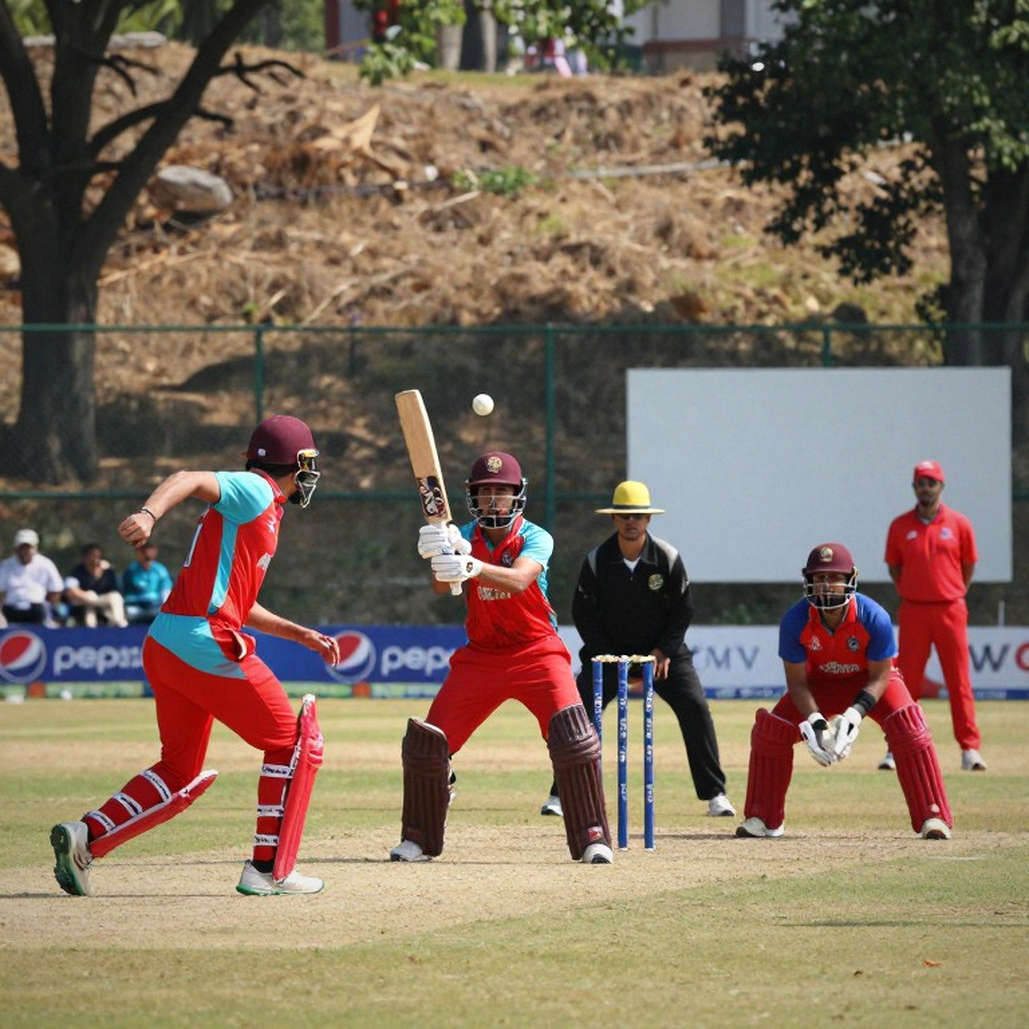
The story's real centre is Naqvi. Whenever I have seen a domestic triple century, I have first asked — against which bowling attack? In January 2026, for Mid West Rhinos, he made 300 off 295 balls — a strike rate of roughly 101.7. That is not just a score, it is a statement. Surviving 295 deliveries is proof of Test-relevant endurance, and scoring 300 is merging that endurance with aggressive tempo. It is the first such innings in Zimbabwean domestic history. The number carries more weight than the media label.
But I will not print that number the way the source handed it over. A first-class average above 60 is claimed — but across how many innings? In which era? Zimbabwe's domestic first-class structure is weak by global standards, and a high average against weak opposition is a classic inflation risk. That is my first doubt: the triple century is real, but the '60+ average' is not yet verifiable.
Second, and in my view the biggest, gap — bowling. The source calls him an 'all-rounder.' But how many wickets? What style? Economy? Nothing is provided. The absence of any bowling figure in an all-rounder's profile is itself a signal. In my five-field deal chain, this is an empty field, and I do not pass an all-rounder billing with an empty field.
Age 28 opens another door. A batter's peak is usually 27-33. Naqvi sits at the early edge of that peak, yet the international debut is happening now. This is a late-bloomer profile, and historically these convert to long international careers at a lower rate. The age curve descends quickly, and if adaptation doesn't happen in the first two or three series, the development window shrinks.
I want to add one more layer the source left out — the eligibility process. Born in Belgium, raised in Australia, qualifying for Zimbabwe. He received a T20I call-up in 2026, but remained in limbo until the ICC eligibility clearance process was complete. It now is. This is a clean, procedural story. I will not read it through the dramatic frame of 'finally.' It was an administrative gate that opened, nothing more. But it also carries a second meaning — Zimbabwe Cricket drove this process to the end rather than letting the player drift. That is a board-level signal that they are taking diaspora-qualified talent seriously.
Here I add something from experience. In 2026, when I chased Neymar's €222m buyout through three separate threads — Spanish buyout law, La Liga's refusal of the deposit, and PSG's FFP position — I learned that every deal leaves a receipt. So does this one. The ICC clearance is a document. The domestic triple century is a scorecard. The 2026 T20I call-up is a selection list. Their dates and contexts differ, and I will not merge them into one frame. A T20I call-up is not evidence of Test readiness. That format gap is the most under-flagged risk in this story.
Now the part every transfer reporter should look at first — the money. This series has minimal broadcast value. Zimbabwe-Afghanistan Tests are not a major draw in the global market. There is no fantasy or betting-market relevance. Naqvi's commercial value is presently near zero — uncapped, low-profile fixture. Don't look for a 'star premium' in this story. The operative driver here is player development, not revenue. And that is the correct read.
But there is a transmission channel worth noting, and it sits at the talent-supply layer. A mid-tier board with a thin pipeline can fill its gaps via the diaspora/eligibility route. This is an example of cricket's emerging global player market, where a player chooses the fastest national route available to him. If Naqvi succeeds, quiet replication by other mid-tier boards can be expected. That is a slow but real transmission.
I watched a league get born. It looked like a spreadsheet with hope in it. This story is not that. It is a small, clean eligibility-to-selection item, and in my view its real value is as a case study — not as a forecast.
What to watch next? Three things. First, his bowling usage in the first innings — if he bowls 10+ useful overs, the all-rounder billing is validated. Second, the mode of dismissal — repeated dismissals against quality seam/spin movement would confirm the adaptation-risk hypothesis. Third, and most direct — is he in the playing XI for the first Test? The eligibility gate has opened, but the gate is now selection. When he walks out on November 5, the first question will be the same one it has been for fifteen years: who signed off?